

In a nutshell
In MTG Draft, you build a deck on the spot using cards you select at the table. Each player starts with three boosters. You choose one card at a time and pass the rest: first to the left, then to the right, and finally to the left again. Afterwards, you build a deck of at least 40 cards. A good starting point is 17 lands and 23 other cards. You add regular basic lands afterwards.
Eight players, three packs per person, and a deck that didn't exist at the start of the evening. That’s what makes Draft so fun for me: you don’t just choose which cards you play, you also build a plan as you go. It is one of my favorite ways to play Magic.
You don’t need your own deck. However, it helps if you know the basic rules. Below, you can read how a standard Booster Draft works, which boosters you need, and how to turn individual picks into a playable deck.
What is the difference between Draft and Sealed?
Draft and Sealed are both Limited formats: you play with a limited card pool that you receive during the event, supplemented by basic lands. Therefore, you do not use your existing collection to strengthen your deck.
- Draft: every player starts with three boosters. You choose cards from the packs being passed around and build your card pool with them.
- Sealed: you normally receive six boosters and build a deck from the cards you open yourself. You do not pass any cards.
In both, you normally build a deck of at least 40 cards. Sealed gives you more time to look at all the cards at once; Draft adds the decisions made while passing. A large collection gives you no head start, but experience, card knowledge, and luck certainly play a role.
What do you need for a draft night?
- Preferably eight players. Six can also work. With four players, Pick-Two Draft is a handy variant; more on that later.
- Three suitable boosters per player. Choose regular Play Boosters for a draft, or Draft Boosters from an older set. For your first night, one set is the easiest to manage.
- A large supply of basic lands. Ensure all five colors are available. At a store, you can ask in advance if they can be borrowed.
- Sleeves and something to track life. With at least 40 sleeves per person, you can protect your deck.
- A table and enough time. Everyone must be able to easily pass packs to the next player.
Pay attention to the booster type: Set Boosters and Collector Boosters are not designed for a standard Booster Draft. Jumpstart Boosters have their own way of playing. In MTG booster types explained, you can read about the differences.
SpellArmory Tip
For eight players, you need 24 boosters; for six players, 18. Check how many boosters are in the chosen box: that differs per product. My scheduling advice for a first night with eight players and three rounds: reserve about 3 to 4 hours, with extra room for explanations. Ask about the specific schedule for a retail event.
How does a draft work? Step by step
- Sit at the table. Everyone sets out three unopened boosters. Do not open them all at once.
- Open the first booster. Remove tokens, advertising cards, and other non-playable cards. Leave playable cards, including lands, in the pack; follow any specific instructions from the organizer.
- Choose one card. Place your choice face down on your own pile. Such a choice is called a pick.
- Pass the rest to the left. You receive a pack from your right. Choose one card from that and pass the remaining cards again. Continue until all packs are empty.
- Open booster two and pass to the right. The choosing works the same, but the direction changes.
- Open booster three and pass to the left again. Once these packs are gone, the drafting is done.
- Build your deck. Choose the cards that form the best plan together and add basic lands.
- Play one-on-one. In a regular Booster Draft, you start with 20 life. A match is usually best-of-three: whoever wins two games wins the match.
You don't need to draft 40 non-land cards
The number of cards you draft depends on the booster contents. A Play Booster with 14 playable cards will provide 42 drafted cards across three boosters if you draft all playable cards. These can also include lands. The exact number can vary per product.
Your final deck therefore does not need to contain almost your entire card pool. You often choose about 23 non-land cards and supplement them with 17 lands. You can add Plains, Island, Swamp, Mountain, and Forest; you must have drafted other lands yourself.
Building your draft deck: start with 17 lands and 23 spells
At least 40 cards is the rule; exactly 40 is usually the advice. Each extra card makes it less likely you will draw a specific strong card. Therefore, start with your best cohesive selection, even if you have to leave behind a nice rare.
Example of a 40-card draft deck
Creatures also count toward the 23 spells: by this, we mean all non-land cards when deckbuilding. This distribution is a starting point, not a mandatory recipe.
Choose your colors and your plan first
For your first drafts, I recommend two main colors. Look for a combination with enough playable cards and a plan: attacking early, breaking through with flying creatures, or soaking up the first attacks and winning later.
Distribute your lands according to the mana your cards require. Nine lands of one color and eight of the other can be a starting point, but a deck with many early green cards may need more green sources. A card that requires two mana of the same color places higher demands on your mana base.
Make sure you can play something early
Arrange your non-land cards by mana value: their total mana cost. This makes your mana curve visible. Do you mainly have cards of four, five, and six mana? Then you run the risk that your opponent will already have a board presence before you get started.
As a practical starting point, you can aim for about 15 to 17 creatures, several two-mana plays, and a limited number of expensive finishers. Cards that create creatures can fulfill a similar role. The set and your strategy determine the final distribution. Start with 17 lands; only go to 16 or 18 if your deck gives a clear reason to do so.
What do you do with the remaining cards?
Your remaining drafted cards form your sideboard. Between games within a match, you can use them to adjust your deck. For example, by swapping in an answer to artifacts if your opponent plays an important artifact. Your deck must still contain at least 40 cards after swapping.
Making good picks: what should you pay attention to?
1. Look at power, not just rarity
A rare is not automatically the best card in the pack. A cheap removal spell can be more important than a spectacular card that requires a lot of mana or a very specific deck. Ask yourself: what does this card do, how easily can I play it, and how does it help me win?
2. Stay flexible in the beginning
Your first pick is not a contract. If mostly good cards in other colors come along later, you are allowed to change direction. At the same time, keep an eye on ensuring that you eventually collect enough cards for one cohesive deck.
3. Read signals as clues
Do you repeatedly get passed strong blue cards later in the first booster? That may indicate that blue is being chosen relatively little by the players passing to you. One good card doesn't prove that: there could have been several strong cards in the pack.
In booster two, you receive cards from the other side of the table. As a result, the supply may change. Therefore, do not draw a hard conclusion about the colors of your neighbor based on one pack. Look for patterns and learn which commons and uncommons are strong in the chosen set.
4. Fill the gaps in your deck later
In the third booster, it is increasingly about what you are still missing. Do you already have three expensive finishers but barely any two-mana creatures? Then a simple, cheap creature can be your best pick. The same goes for removal or a land that better supports your colors.
SpellArmory Tip
Before your draft, check the themes of the color combinations in that set. The two-color uncommons often provide a clue: think of tokens, graveyards, or many instants and sorceries. This way, you will better recognize which cards help each other. Use the theme as a direction, without automatically choosing every card in those colors.
Two real cards: recognizing removal and a finisher
These cards from Magic: The Gathering Foundations show two different functions. They are illustrative examples, not a fixed pick order, and not cards that you are allowed to add to a draft of a different set.
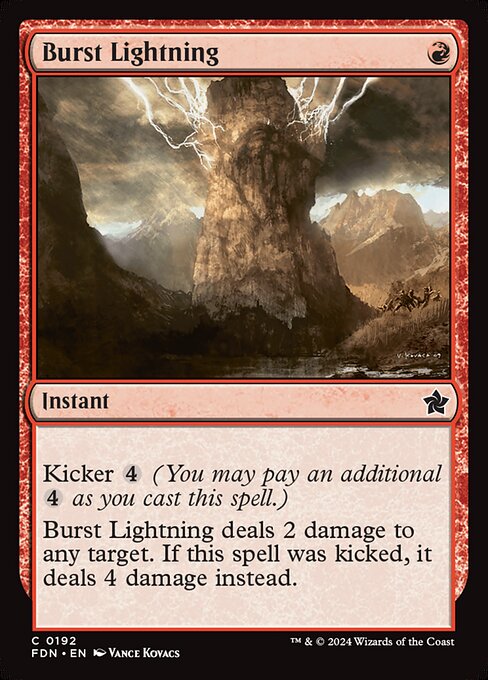
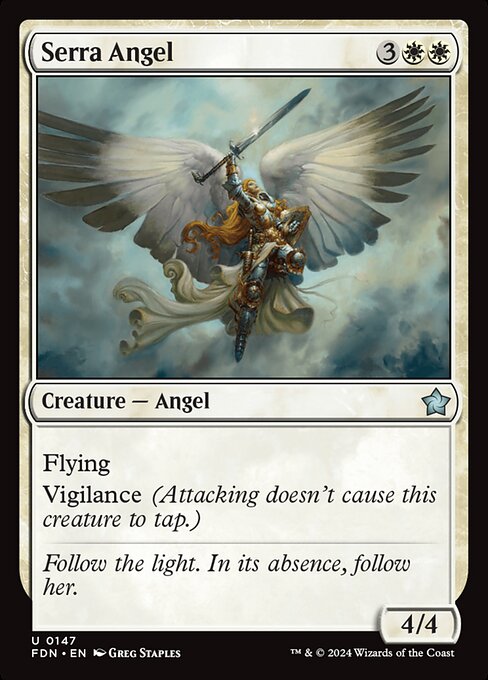
Card images via Scryfall; Magic: The Gathering and card illustrations © Wizards of the Coast and the respective illustrators. Click on a card to view it larger.
You can find more explanation about these abilities in all MTG keywords explained.
And the mnemonic BREAD?
You might encounter BREAD: Bombs, Removal, Evasion, Aggro, and Duds. The precise interpretation of the last letters differs per explanation. It helps you think about strong threats, answers, and creatures that are difficult to block.
My advice: use it as a memory aid, not as an automatic ranking. An expensive bomb outside your colors is not automatically better than a card your deck needs. Mana curve, playable colors, and synergy between cards carry weight.
Five pitfalls for your first draft
- Playing too few lands to fit more fun cards. Without enough mana, those cards will just stay in your hand.
- Wanting to play every strong card. Adding a third color, also known as splashing, requires reliable mana-fixing: cards or lands that provide the right color.
- Choosing only expensive cards. Ensure you can also do something meaningful in the first turns.
- Sticking to your first pick at all costs. A card is allowed to end up in your sideboard if another color combination works out better.
- Playing too many cards that need help. A hand full of combat tricks does little if you don't have creatures. Always check if your deck can fulfill the conditions of your cards.
Are you allowed to choose an expensive rare for your collection?
Yes. Choosing a card for its collectible value instead of its playability is often called rare drafting. The draft rules do not dictate that you must always choose the best card for your deck. Even at an organized event, you do not have to justify your pick at the table.
The trade-off is practical: that card may be important to you, while another pick would make your deck stronger. When organizing a home draft, agree in advance on which cards everyone keeps afterwards, especially if someone else is paying for the boosters or you are playing with a borrowed Cube.
During a normal individual draft, you keep your picks and plans to yourself. Do not coordinate colors with your neighbors. Reading signals means looking at the cards that come by, not agreeing among yourselves who gets which color.
Drafting with four or two players, and other variants
- Pick-Two Draft: intended for four players. Everyone starts with three boosters and chooses two cards each time before the pack is passed. So you use 12 boosters in total. The directions remain left, right, left. You do not get more cards because you choose two at a time; the cards are divided into fewer picks.
- Winston Draft: a variant for two players where you choose from piles from a shared card pool. The official explanation is at Wizards: Winston Draft.
- Cube Draft: you draft from a pre-assembled, reusable collection. You do not buy new boosters for every session. Read how to build your own Cube.
- Chaos Draft: you combine boosters from different sets. This requires different choices because set themes and mechanics do not always align.
Products like Lorwyn Eclipsed Draft Night are made for Pick-Two with four players. That product contains 12 Play Boosters, basic lands, and a Collector Booster which can serve as a prize, for example. The Collector Booster is not part of the twelve packs with which you draft.
Ready for your first draft?
Start with the basics: suitable boosters, enough basic lands, and a group that knows you are still learning. You don't have to evaluate every card perfectly right away. Try first to build a deck that can play its spells and has something to do in the first turns.
Organizing a draft night yourself?
Check out the boosters and booster boxes at SpellArmory. Choose Play Boosters or suitable older Draft Boosters and calculate three packs per player.
New to Magic? Start at Learning how to play Magic: The Gathering. Looking for a place to play in the region? See where you can play MTG in Maastricht and Limburg and check with the location when there is a draft.
Sources and rules
The rules and product information have been verified against the Wizards sources below. The deck distributions and strategic tips are guidelines. Older strategy articles may describe booster contents belonging to the set from that time.
- WPN: current Magic Tournament Rules — Limited deckbuilding and draft procedures, chapter 7.
- Wizards: Booster Draft — the basis of the format.
- Wizards: What Are Play Boosters? — setup and original content of Play Boosters.
- Wizards: How to Booster Draft — deckbuilding and 17 lands as a starting point.
- Wizards: Drafting 101 — Understanding Signals — signals and their limitations.
- Wizards: Foundations Release Notes — including Burst Lightning and kicker.
- Wizards: Pick-Two Draft and Lorwyn Eclipsed Draft Night — gameplay and product contents.

Written by Omèr Cremers
Owner of SpellArmory, social worker, and full-time father. Avid MTG player and collector from Maastricht — Commander is my favorite format. Questions about which product is right for you? Feel free to send me a message.