

SpellArmory Academy · Beginners
In short
Keywords are standard game terms on Magic cards. If you know, for example, flying, trample, or ward, you also know what that ability does on a new card. This guide explains twenty common keyword abilities and seven keyword actions, with real cards and practical examples.
The most important differences: reach helps with blocking, flash is about when you can play a card, and haste is about what a creature can do immediately. Hexproof, ward, and indestructible each protect in a different way.
A card only needs one unknown word to make an entire combat phase unclear. Can you block that creature? Do you still take damage if the blocker dies? And why does your removal work against indestructible, but not against hexproof?
Below you will find the keywords you encounter often. You don't have to learn them all beforehand: use the alphabetical index when you want to look something up during a game. Starting completely from scratch? Then first read how Magic: The Gathering works.
What actually is a keyword?
Magic uses English game terms as a shorthand reference to established rules. The italicized explanation in parentheses is called reminder text. It does not appear on every version of a card; the keyword works even without that explanation.
- Keyword ability: a characteristic or ability, such as flying, equip, or ward.
- Keyword action: a game action you perform, such as scry, mill, or sacrifice.
- Ability word: a label such as landfall. The label itself adds no rules; read the full ability following it.
This guide is a reference for common terms, not a list of every mechanic ever created. For an older card, the printed text may differ from the current Oracle text: the official card text that applies to the game.
1. Attacking and blocking
Flying — only blockable by flying or reach
An attacker with flying can only be blocked by creatures with flying and/or reach. A creature with flying can itself also block an attacker without flying. Other restrictions still apply.
Reach — flying attackers can block
Reach allows a creature to block attackers with flying. It does not grant flying itself and does not make the creature harder to block when it attacks.
Menace — at least two blockers needed
A creature with menace can only be blocked by two or more creatures. The defender may also decide not to block at all.
Note: each blocker must be able to block legally on its own. Does the attacker also have flying? Then at least two chosen blockers must have flying or reach. If one blocker disappears after blocking, the attacker remains blocked.
Trample — excess combat damage can pass through
When a blocked attacker with trample is involved, you may assign excess combat damage to what it is attacking: the player, planeswalker, or battle. To do so, you must first assign lethal damage to all blockers: enough damage to count as fatal for this distribution.
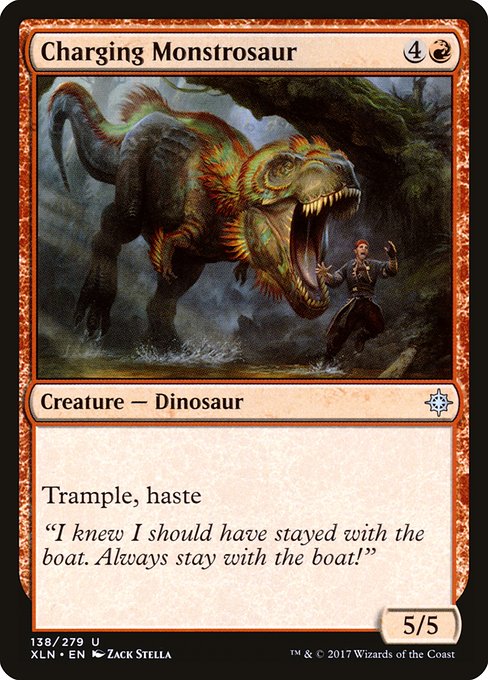
Example: a 5/5 against a 2/2
Charging Monstrosaur attacks a player. The player blocks with one undamaged 2/2 creature. Without other effects, you can distribute the damage like this:
Without trample, the attacker would assign all its damage to the blocker. Just because the blocker only has 2 toughness does not mean the remaining damage passes through automatically.
SpellArmory Tip
With trample, first calculate what the blockers require, and only then what can pass through. Existing damage and deathtouch can change that calculation. Regular trample does not allow damage to an attacked planeswalker to automatically pass through to its controller.
2. Combat damage and keeping your creatures upright
First strike — dealing combat damage earlier
First strike allows a creature to deal damage in an extra, earlier combat damage step. Creatures without first strike or double strike deal their damage only in the regular step, if they are still in combat then.
Example: a 2/2 with first strike is blocked by a regular 2/2. The first 2 damage kills the regular 2/2 before it can strike back. This assumes no other effects are involved.
Double strike — damage in both steps
Double strike allows a creature to deal damage in both the first and regular combat damage steps. It must still be in combat to do so. It does not attack twice and does not receive an extra combat phase.
Deathtouch — a little damage can be enough
Any amount of damage greater than zero from a source with deathtouch is normally enough to destroy a creature. This also applies to non-combat damage, such as with fight.
Note: the damage must actually be dealt. Prevented damage does not count. Deathtouch does not destroy a creature that has indestructible.
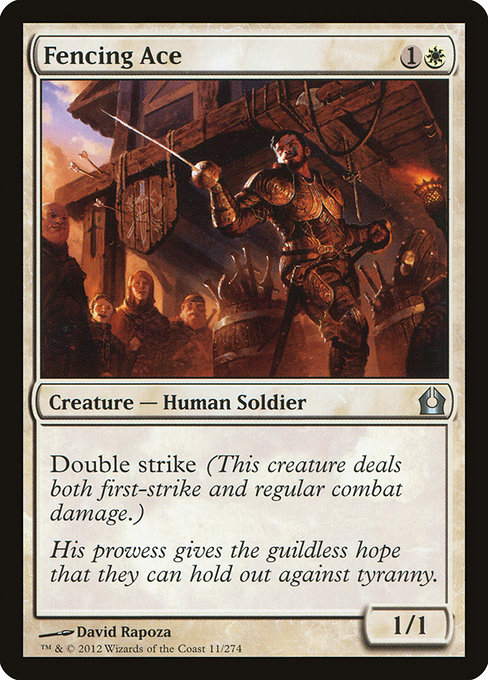
Double strike: does the second hit go to the player?
Fencing Ace is a 1/1 with double strike. A regular 1/1 blocks it and dies in the first damage step. Fencing Ace remains a blocked attacker. Without trample, it deals no damage to the player in the second step, even though the blocker is gone.
Was it completely unblocked? Then without other effects, it would deal 1 damage to the player twice.
Vigilance — attacking without tapping
A creature with vigilance does not tap when it is declared as an attacker. This allows it to remain available to block on a following turn.
Vigilance does not untap a tapped creature and does not grant haste. A creature that is already tapped generally still cannot attack.
Defender — cannot attack
A creature with defender cannot attack unless another effect allows it to. It can block when otherwise legal. Haste does not remove defender.
In Magic, you attack players, planeswalkers, or battles. You normally do not choose a creature as the target of your attack; the defender determines which creatures block.
3. Hexproof, ward, and other protection
These abilities are not interchangeable forms of invulnerability. First check whether a spell or ability uses the word target and then what the effect exactly does.
Hexproof — opponents cannot target this
A permanent with hexproof cannot be the target of spells or abilities your opponents control. Your own spells and abilities can target it.
An effect that destroys all creatures without targeting them can destroy a creature with hexproof. Hexproof also does not prevent combat damage.
Shroud — even you cannot target this
Shroud prevents a permanent or player from being targeted by spells or abilities from anyone at all. The important difference from hexproof: your own targeted buffs or equip ability also cannot target a creature with shroud.
Ward — targeting is possible, but a trigger follows
When a permanent with ward becomes the target of a spell or ability an opponent controls, ward triggers. When that trigger resolves, that spell or ability is countered unless that opponent pays the ward cost.
With ward {2}, that is two mana of any color. Other cards might require life or a discard, for example. Read the cost on the card.
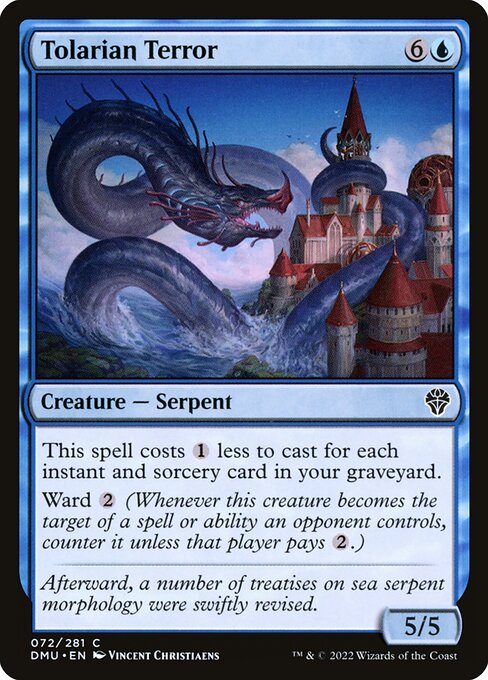
Why ward is not hexproof
An opponent may target Tolarian Terror with a removal spell. The ward trigger goes on the stack on top of that spell. If that player does not pay two mana when the trigger resolves, ward tries to counter the removal spell.
A spell that cannot be countered is not stopped by this. That same spell still cannot choose a creature with hexproof as a legal target.
Indestructible — cannot be destroyed
Indestructible prevents a permanent from being destroyed. Therefore, a creature with indestructible is not destroyed by lethal damage, deathtouch, or an effect that says “destroy”.
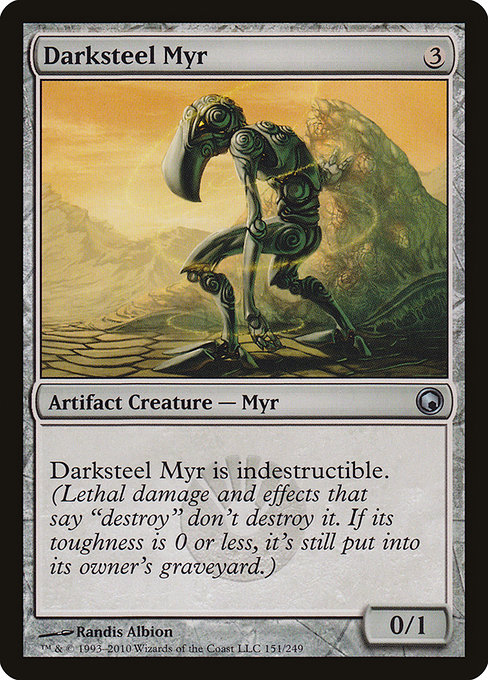
Damage is still dealt. Lifelink and abilities that respond to damage can therefore still work. Indestructible does not protect against exile, returning to the hand, sacrifice, or toughness of 0 or less.
Darksteel Myr is a 0/1. If it gets −1/−1, its toughness is 0 and it goes to the graveyard, despite indestructible. A single point of regular damage does not do that.
Protection — four specific forms of protection
Protection always names what something is protected from, for example protection from black. For a creature, that generally means:
- Damage is prevented from sources with that characteristic.
- No Auras or Equipment with that characteristic can be attached to it.
- Cannot be blocked by creatures with that characteristic.
- Cannot be targeted by spells with that characteristic or abilities from such sources.
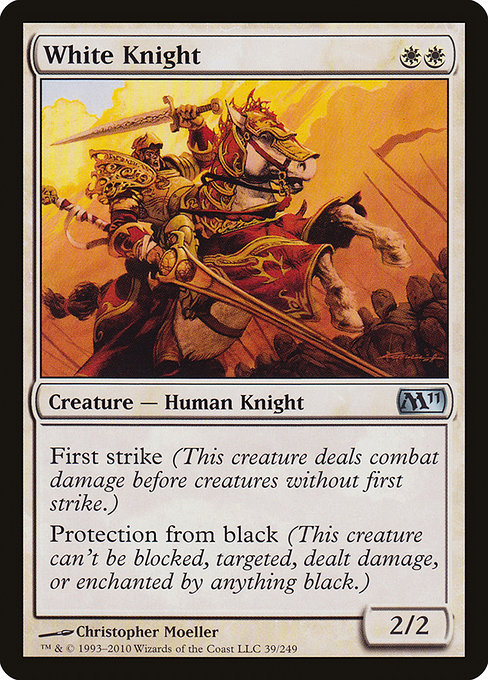
White Knight: protection from black
Black creatures cannot block White Knight. Black damage sources deal it no damage, and black spells cannot target it.
A black spell that destroys all creatures can destroy it: that spell does not target it and deals no damage. Also, an effect that makes you sacrifice a creature can work around this protection.
Protection also applies against your own cards. You therefore cannot target your White Knight yourself with a black Aura spell.
SpellArmory Tip
Do not automatically translate “protected” into “cannot die”. Ask: is it being targeted, damaged, destroyed, exiled, or sacrificed? The answer determines which protection helps. You can read more about targeting and responding in the guide on the stack and priority.
4. Playing fast: haste and flash
Haste — unaffected by summoning sickness
Normally, a creature cannot attack or activate its own abilities with the tap or untap symbol in the cost, unless you have controlled it continuously since the beginning of your most recent turn. That restriction is often called summoning sickness.
Haste removes that restriction. Charging Monstrosaur can therefore attack immediately in the turn it comes under your control, provided attacking is otherwise legal. Haste does not untap it.
Blocking is allowed even without haste. A new creature can block normally if it is untapped and meets the other requirements.
Flash — playing at instant timing
Flash allows you to play a card at a moment when you could cast an instant, meaning when you have priority. This can also be during an opponent's turn or in response to a spell.
Flash does not grant haste. Do you want to use a creature with flash as a surprise blocker? Then let it enter the battlefield before blockers are declared. Once blockers have been declared, you cannot add a regular blocker as an afterthought.
5. Life, buffs, and equipment
Lifelink — gaining life through damage
Damage from a source with lifelink causes the controller of that source to gain that much life at the same time. This also works with damage to creatures and with non-combat damage.
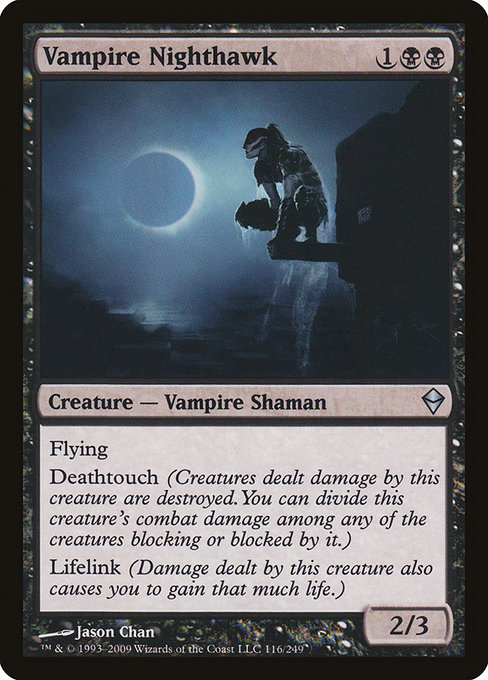
Vampire Nighthawk has 2 power. If it deals 2 damage to a 1/1 blocker without other effects, you gain 2 life. The blocker's toughness and deathtouch do not reduce that damage to 1. If the damage is prevented, you do not gain life for that portion.
Prowess — growing through noncreature spells
Each time you cast a noncreature spell, prowess triggers. Upon resolution, the creature gets +1/+1 until the end of the turn. An instant, sorcery, or non-creature artifact can trigger this, for example.
Playing a land is not casting a spell. Casting an artifact creature is a creature spell. Therefore, neither triggers prowess. The bonus is temporary and is not a +1/+1 counter.
Equip — attaching Equipment to your creature
With equip, you pay the indicated cost to attach the Equipment to target creature you control. This can normally only be done during your own main phase, with an empty stack, and when you have priority.
The equip cost is separate from the cost to cast the Equipment spell. If the equipped creature dies, the Equipment remains on the battlefield. You can equip it again later.
Enchant — what an Aura may be attached to
Enchant creature means that Aura may only enchant a creature. Other Auras may, for example, enchant a land or a player. “Enchant” is not a separate cost or button to attach something for free.
An Aura cast as a spell targets what it will enchant. An Aura that enters the battlefield in another way does not automatically target. If an Aura can no longer be legally attached, it goes to the graveyard as a state-based action.
6. Combinations that often raise questions
The following situations assume undamaged blockers and no other effects that change the outcome.
Deathtouch + trample
An attacking 4/4 with both abilities is blocked by a single 6/6. You may assign 1 damage to that blocker and 3 to the defending player: because of deathtouch, that single assigned damage counts as lethal for trample.
First strike + deathtouch
A 1/1 with both abilities can destroy a regular 6/6 blocker in the first combat damage step, before it hits back. A blocker with indestructible will survive that damage, however.
Double strike + lifelink
An unblocked 3/3 with both abilities deals 3 damage to the player twice. You gain 3 life in each combat damage step: 6 in total.
Flying + menace
This attacker requires at least two legal blockers. Two regular creatures without flying or reach do not suffice. One creature with reach plus one regular ground creature does not work either.
7. Keyword actions: what must you perform?
These are instructions. Always read who performs the action, how many cards are involved, and what targets the spell or ability may have.
Scry — arranging your next cards
With scry 2, you look at the top two cards of your library. Put as many as you want on the bottom and the rest on top, in any order. You do not put them into your hand.
Surveil — choosing between the top and graveyard
With surveil 2, you look at the top two cards of your library. Put as many as you want into your graveyard and the rest back on top in any order. The difference from scry is the destination of the cards you do not want to keep on top.
Mill — from the library to the graveyard
A player who mills three cards puts the top three cards of their library into their graveyard. Milling is not drawing cards and not discarding. An empty library does not mean loss by itself; you normally lose when you must draw a card from an empty library.
Exile — moving to the exile zone
An exiled card goes to a separate game zone, not to the graveyard and not literally outside the game. Whether the card returns later or can be played from exile depends on the card or ability in question.
Fight — two creatures deal damage to each other
The two creatures deal damage equal to their power to each other simultaneously. This is not combat damage: first strike and double strike do not change a fight. Deathtouch and lifelink do work with this damage.
Sacrifice — offering one of your own permanents
You move a permanent you control from the battlefield to its owner’s graveyard. Sacrificing is not destroying; indestructible does not stop it.
Choosing what you sacrifice is not targeting in itself. An effect that makes you sacrifice a creature can therefore also cause a creature with hexproof to disappear. Check, however, whether the spell or ability targets the player.
Proliferate — expanding existing counters
Choose any number of permanents and/or players with counters, potentially zero. Each chosen permanent and each chosen player gets one additional counter of each kind already present.
A creature with two +1/+1 counters gets one more. If a chosen permanent has multiple types of counters, you add one of each of those types. You do not introduce a new type, and proliferate itself does not target.
Frequently asked questions about MTG keywords
Do flying and trample only apply when you attack?
Flying is also relevant when blocking: a creature with flying can block a flying attacker. Trample only changes how an attacking creature assigns combat damage. A blocker with trample does not deal excess damage to the attacking player.
Does a keyword work double if a creature has it twice?
That depends on the keyword. Two instances of flying, lifelink, or double strike provide no double benefit. Two separate prowess abilities do both trigger. Multiple ward abilities also trigger separately when their condition is met.
Can I react between first strike and regular combat damage?
Yes. After the first combat damage, necessary game actions and triggers are processed; then players receive priority. You can then cast an instant, for example, before the regular combat damage step begins. You cannot react between the assignment and the dealing of damage within a single damage step.
Do I need to know all keywords before playing Commander?
No. Learn the terms on your own cards first and look up unknown abilities when they appear. Ask for the full card text when an interaction is unclear. The Commander guide will help you with the rules of the format itself.
SpellArmory Tip
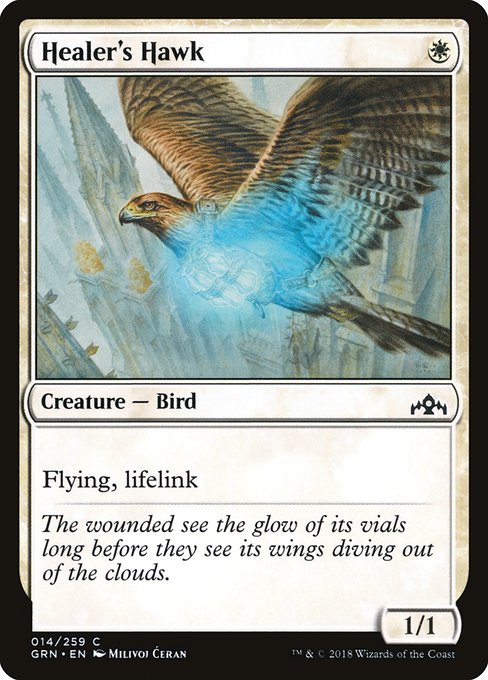
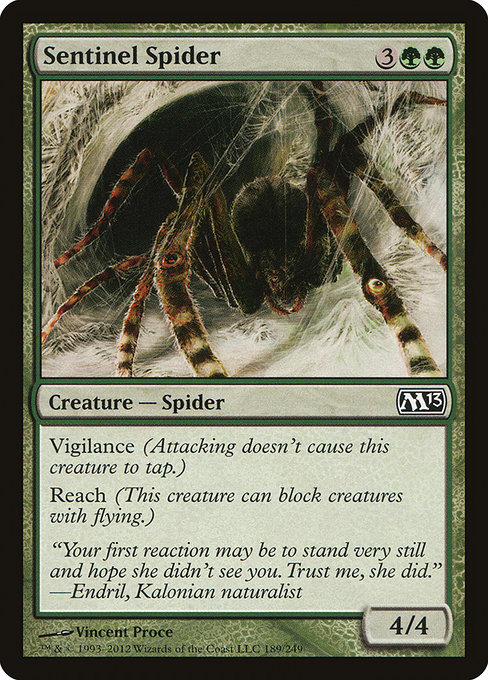
My advice: practice with one interaction at a time. For example, place Healer’s Hawk and Sentinel Spider next to each other and discuss who can block whom. Only add menace or another ability afterward. This way, you see exactly which rule changes the situation.
Further reading at SpellArmory Academy
- How does Magic: The Gathering work? — the basics of a game.
- The stack and priority explained — targeting, triggers, and reacting.
- MTG deck archetypes explained — how cards form a game plan.
- Commander / EDH explained — the rules of Commander.
- The MTG glossary — other terms at the table.
Looking for cards or accessories for your next game? View the SpellArmory assortment.
Sources and verification
Game rules verified on September 27, 2026, based on the official Wizards of the Coast rules and the Comprehensive Rules of September 25, 2026. Relevant sections: 207.2 (card text), 510 (combat damage), 701 (keyword actions), and 702 (keyword abilities).
Card images via Scryfall; Magic: The Gathering and the card images are from Wizards of the Coast. Tap a card to view the larger image. Use current Oracle text and rules for older cards with deviating reminder text. Practical tips are advice from SpellArmory.

Written by Omèr Cremers
Owner of SpellArmory, social worker, and full-time father. Fanatical MTG player and collector from Maastricht — Commander is my favorite format. Questions about which product suits you? Feel free to send me a message.